
Local SEO Services: 2026 Playbook for Google Business Profile
In today’s digital marketplace, the way customers discover and interact with local businesses is rapidly evolving. The surge in “near me” searches and the growing reliance on map-based results have transformed the local search landscape. Small businesses and enterprises alike need to stay ahead of these trends to attract more customers and build long-lasting relationships. If you’re a business owner seeking to improve your visibility, understanding the intricacies of local SEO services and mastering Google Business Profile optimization is no longer optional, it’s essential for sustainable growth.
Local SEO is more than simply showing up on a map. It’s about capturing intent-driven customers at the exact moment they’re ready to buy, call, or visit. Whether you operate a single storefront or manage multiple locations, your Google Business Profile (GBP) serves as your digital front door. When optimized strategically, it can catapult your brand to the top of local search results, drive valuable calls and form submissions, and deliver measurable ROI. In this comprehensive playbook, we’ll break down the latest tactics for 2026, address the most common mistakes, and equip you with actionable strategies, from landing page design to review management and analytics & reporting. If you’ve been searching for an “SEO agency near me” or exploring small business SEO services, this guide is for you.
GBP Setup Mistakes That Block Visibility
Setting up your Google Business Profile may seem straightforward, but even minor missteps can prevent your business from appearing in local search results. One of the most common mistakes is providing inconsistent or inaccurate business information. If your name, address, and phone number (NAP) don’t match across your website and other directories, Google’s algorithm may become confused, leading to suppressed rankings or even removal from the map pack. Double-check every field during setup and update your information regularly to reflect changes in hours, location, or contact details.
Another frequently overlooked error is selecting the wrong primary category. Your business category should clearly define what you do, as this directly impacts which searches you appear for. Avoid using broad or unrelated categories, and supplement your primary category with relevant secondary ones. For example, a dental clinic shouldn’t be listed under “Medical Clinic” if “Dentist” is available. This targeted approach helps Google connect your business with customers actively seeking your services.
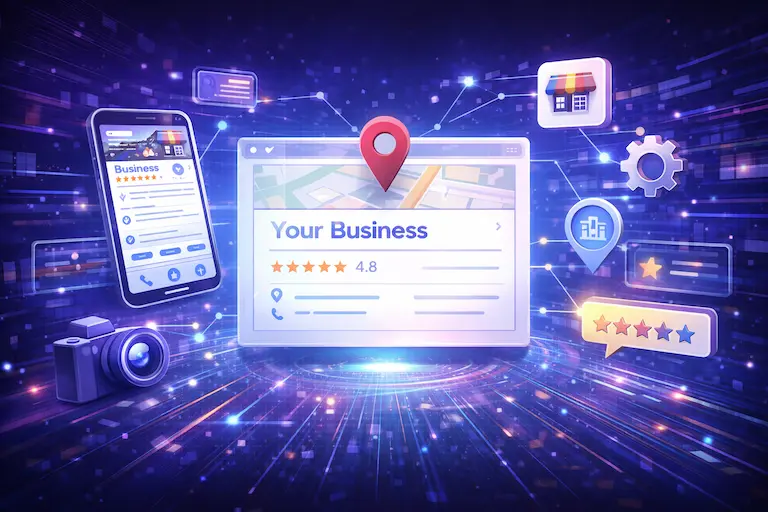
Many businesses inadvertently block visibility by neglecting to verify their profiles. Unverified profiles lack credibility and are more susceptible to edits by third parties or even malicious actors. Always complete the verification process promptly, whether by postcard, phone, or email. Additionally, failing to upload high-quality images, or reusing generic stock photos, can harm your profile’s appeal and trustworthiness. Authentic photos of your business, staff, and products help potential customers visualize their experience, further boosting your GBP’s performance.
Finally, don’t overlook the importance of regular profile updates. Businesses that rarely post updates, respond to reviews, or utilize new GBP features can quickly fall behind competitors who do. Take advantage of posts, Q&A, and service listings to keep your profile dynamic and engaging. If you’re unsure where your profile stands, consider working with a reputable small business SEO service to audit your GBP and provide expert guidance.
Local Landing Pages That Convert
A well-crafted local landing page is a cornerstone of effective local SEO services. These pages should be geographically targeted, tailored to the needs and language of your audience, and optimized for conversion. Start by incorporating location-specific keywords naturally throughout your copy, headers, and meta tags. This helps Google, and your prospective customers, understand which areas you serve, improving your chances of appearing in local search results.
The best local landing pages go beyond mere optimization. They provide clear calls to action, such as phone numbers, contact forms, and appointment booking options, placed above the fold for maximum visibility. Customer testimonials, trust badges, and embedded maps offer additional reassurance while making it easy for users to find your location. Remember, your goal isn’t just to attract visitors, it’s to convert them into paying customers.
Content relevancy is essential. Include details about your services, staff expertise, and community involvement to foster a sense of trust and relatability. Using structured data (schema markup) for addresses, reviews, and business hours can further enhance your listing’s chances of earning rich results in search. If you manage multiple locations, create unique landing pages for each, with tailored content and images to avoid duplicate content penalties.
For businesses looking to maximize their landing page performance, it’s important to test and iterate. Use analytics & reporting tools to track bounce rates, form submissions, and call conversions. If you need help designing high-converting local landing pages, you might consider partnering with an experienced SEO agency near me that specializes in small business SEO services.
Reviews Strategy (Without Getting Suspended)
Customer reviews are a pivotal ranking factor for local SEO, but managing them requires a delicate balance. Aggressively soliciting reviews or incentivizing customers to leave positive feedback can result in your Google Business Profile being suspended. Instead, focus on organic, authentic review acquisition. Train your staff to request reviews in person after a transaction or service, and follow up via email or SMS with a polite, non-incentivizing message and a direct link to your GBP review page.
Responding to reviews, both positive and negative, is equally important. A thoughtful response demonstrates that you value customer feedback and are committed to resolving issues. This level of engagement builds trust with potential clients and signals to Google that your business is active and reputable. When responding, personalize your message and avoid using canned responses or keywords excessively, as this can appear inauthentic and trigger Google’s spam detection.
Never post fake reviews or ask employees to leave feedback unless they’ve genuinely used your service. Google’s algorithms are increasingly sophisticated at detecting patterns of suspicious activity, such as sudden spikes in reviews or identical wording across multiple submissions. Violating these guidelines can lead to penalties or suspension, jeopardizing your online reputation and visibility.
For businesses with multiple locations, it’s best to manage reviews centrally but respond locally. Assign a dedicated team member or partner with a reputable SEO agency to monitor, report, and address reviews promptly. A consistent, transparent approach not only protects your GBP but also helps you gather valuable insights for service improvement.
Tracking Calls & Form Leads in GA4
Accurate tracking of calls and form submissions is essential for measuring the ROI of your local SEO services. With Google Analytics 4 (GA4), businesses can gain deeper insights into user interactions across their websites and Google Business Profiles. Set up event tracking for phone number clicks, contact form submissions, and appointment bookings to understand which marketing channels are driving conversions.
Begin by configuring GA4 to recognize and log call events. This typically involves adding click-to-call tracking tags through Google Tag Manager. For form leads, implement event tags that trigger when a user successfully submits a form. These events should be clearly labeled in your analytics dashboard, allowing you to attribute leads to specific campaigns, landing pages, or geographic regions.
GA4’s robust reporting capabilities enable you to build custom funnels, analyze user journeys, and calculate conversion rates for each local landing page. This data-driven approach helps you identify bottlenecks and optimize your on-site experience, ultimately increasing the effectiveness of your local SEO strategy. Review your analytics regularly and adjust your tactics based on real-time performance trends.
If you’re new to GA4 or need help configuring advanced tracking, consider working with an SEO agency near me. Professional guidance ensures your analytics & reporting setup is accurate, comprehensive, and aligned with your business goals, helping you make smarter decisions and drive more qualified leads.
Service Area Optimization for Multi-Location Businesses
For businesses operating across several locations, service area optimization is a crucial element of local SEO services. Google Business Profile allows you to specify service areas, but these must accurately reflect where your business is licensed and capable of serving customers. Avoid the temptation to overextend your service area, as Google may penalize listings that appear deceptive or misleading.
Create unique Google Business Profiles for each location, ensuring that each profile has its own dedicated local landing page, complete with tailored content, images, and customer reviews. This localized approach helps each branch or franchise stand out in its respective market and improves the overall authority of your brand in the eyes of both customers and search engines.
Consistency is critical. Ensure NAP details are uniform across all listings and directories. Leverage local keywords and reference neighborhood landmarks or events to further reinforce your relevance in each target area. For larger organizations, maintain a central database to track and manage updates across all locations, minimizing the risk of inconsistencies or outdated information.
Regularly monitor performance metrics for each location using analytics & reporting tools. Analyze call volume, form submissions, and review sentiment to identify high-performing branches and those that require additional support. This granular approach ensures your local SEO efforts are both scalable and sustainable.
On-Page Signals That Boost Map Pack Rankings
On-page SEO signals play a significant role in influencing your Google Business Profile’s ability to rank in the coveted local map pack. Begin with comprehensive keyword research to identify the terms your target audience uses when searching for your services. Integrate these keywords naturally into your page titles, meta descriptions, header tags, and throughout your content without over-optimization.
Schema markup is another powerful tool for enhancing your on-page signals. By implementing LocalBusiness, Organization, and Review schema, you provide search engines with explicit information about your business, location, and reputation. This can lead to richer search results, including review stars and address snippets, which increase click-through rates from both organic and map-based listings.
Make sure your NAP information is prominently displayed on every page of your website, ideally in the footer. Embed a Google Map with your business location and include driving directions or public transit options. This not only assists users but also reinforces to Google that your website and GBP are connected and relevant for local queries.
Optimize your site’s technical performance by ensuring fast load times, mobile responsiveness, and secure HTTPS connections. Google prioritizes user experience, and slow or difficult-to-navigate sites can hurt your rankings. Regularly audit your on-page elements and technical setup to stay ahead of algorithm updates and maintain your spot in the map pack.
Citations & Directory Management in 2026
Citations, mentions of your business’s NAP on third-party directories, remain a foundational pillar of local SEO services in 2026. Accurate, high-quality citations help search engines verify your business information and build trust in your brand. Focus on authoritative directories that are relevant to your industry and geographic location, such as local chambers of commerce, trade associations, and niche marketplaces.
Inconsistent or duplicate citations can confuse both users and search engines, leading to diminished local rankings. Regularly audit your citations across all platforms, correcting discrepancies and removing outdated listings. Many businesses benefit from using centralized citation management tools or partnering with a professional SEO agency to streamline this process.
As voice search and AI-driven discovery continue to rise, it’s more important than ever to ensure your business information is current and comprehensive. Include additional data points beyond NAP, such as business hours, website URLs, payment methods, and service descriptions. This level of detail not only improves search engine trust but also enhances the user experience for potential customers.
Monitor new citation opportunities and respond quickly to inaccuracies or negative reviews on directory sites. Staying proactive in your citation management can give you a competitive edge, especially as Google’s algorithms become more sophisticated in evaluating local trust signals.
Analytics & Reporting: Proving Local SEO ROI
Demonstrating the ROI of local SEO services is vital for justifying your marketing investment and making informed business decisions. Robust analytics & reporting provide the data needed to track progress, identify opportunities, and refine your strategy over time. Start by establishing clear KPIs, such as call volume, form submissions, direction requests, and foot traffic to physical locations.
Leverage GA4’s advanced reporting features to attribute leads and conversions to specific channels, campaigns, and landing pages. Custom dashboards can help you visualize trends, spot anomalies, and compare performance across different time periods or locations. This granular insight allows you to double down on what’s working and pivot away from underperforming tactics.
Don’t overlook the value of qualitative data. Analyze customer feedback, review sentiment, and user behavior patterns to uncover hidden challenges or areas for improvement. Integrating call tracking software and CRM systems with your analytics platform provides a more complete view of your sales funnel and customer journey.
For business owners seeking clarity and confidence in their marketing efforts, partnering with an experienced SEO agency can make all the difference. Professional analytics & reporting services ensure you’re not only collecting the right data but also interpreting and acting on it effectively to drive measurable results.
Future-Proofing Your Google Business Profile Strategy
As Google continues to roll out new features and refine its local search algorithm, businesses must remain agile in their approach to Google Business Profile optimization. Staying informed about updates, such as new attributes, booking integrations, or messaging capabilities, ensures your profile remains competitive and fully leveraged. Make it a habit to review Google’s official announcements and participate in relevant forums or industry groups for early insights on upcoming changes.
Experiment with emerging GBP features to stand out in crowded markets. For example, leverage appointment scheduling, product or service menus, and advanced Q&A to offer greater value to potential customers. Early adoption can give you a first-mover advantage and signal to Google that your business is proactive and customer-focused.
Invest in ongoing training for your team or collaborate with a forward-thinking SEO agency near me to keep your local SEO skills sharp. Regular audits, competitive analysis, and performance reviews should become standard practice. This commitment to continuous improvement will help you adapt quickly to changes in the local search landscape and maintain your visibility.
Finally, embrace a customer-centric mindset in all your GBP activities. Prioritize transparency, responsiveness, and user experience across your profile, website, and customer touchpoints. By building a reputation for reliability and excellence, you’ll establish a strong foundation for long-term success, regardless of how local SEO evolves in the years ahead.
Conclusion
Local SEO services have become indispensable for businesses aiming to capture and convert intent-driven customers in a rapidly shifting digital landscape. By understanding the most common Google Business Profile setup mistakes, building high-converting local landing pages, and adopting a sustainable review strategy, you lay the groundwork for improved visibility and trust. Accurate analytics & reporting, along with a proactive approach to citations, on-page signals, and service area management, will keep your local SEO efforts both measurable and scalable.
Looking ahead to 2026 and beyond, staying current with Google Business Profile optimization best practices and embracing a data-driven, customer-focused approach will future-proof your business. If you’re ready to take your local presence to the next level, consider connecting with a trusted SEO agency near me or exploring specialized small business SEO services to maximize your ROI. Success in local search isn’t just about being found, it’s about being chosen, time and time again.
References
The following official resources provide additional guidance on AI-driven search features, technical SEO fundamentals,
structured data, Core Web Vitals, and GA4 engagement measurement.
- AI features and your website (AI Overviews / AI Mode) — Google Search Central
- Introduction to structured data markup in Google Search — Google Search Central
- Understanding Core Web Vitals and Google Search — Google Search Central
- Engagement rate & bounce rate (GA4) — Google Analytics Help
- Creating helpful, reliable, people-first content — Google Search Central